
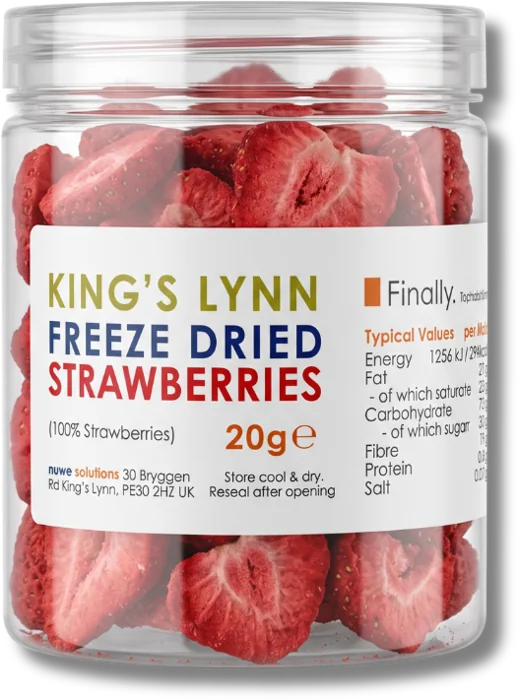
- Freeze-drying removes water at low temperature, so food keeps its shape, colour and flavour.
- Dehydrating uses heat, which is cheaper but changes texture and flavour more.
- Freeze-dried food removes more moisture, which usually means a longer shelf life.
- Freeze-dryers are expensive to buy and run, so outsourcing is often the best option for small brands.
Want freeze-drying without buying a machine? We freeze-dry up to 15kg a day in Norfolk, from £100 per 15kg batch.
How we helpBoth methods remove water from food so it lasts longer, but they work in very different ways and give very different results. If you’re developing a dried product, or adding dried ingredients to a range, choosing the right one makes a big difference to taste, texture, price and shelf life.
How each method works
The food is frozen solid, then placed in a vacuum chamber. The ice turns straight into vapour without melting first (this is called sublimation), so the food’s structure stays intact.
Warm air, usually around 55°C to 70°C, is moved over the food for several hours. The heat draws the water out slowly, and the food shrinks as it dries.
Side-by-side comparison
| Freeze-drying | Dehydrating | |
|---|---|---|
| How water is removed | Frozen, then turned straight from ice to vapour under a vacuum | Warm, moving air over several hours |
| Heat | Very little during the main drying stage | Heat throughout |
| Water removed | Almost all of it | Most of it, varies by method |
| Shape and texture | Keeps its shape; light and crisp | Shrinks; chewy or leathery |
| Flavour and colour | Close to fresh | More concentrated, often darker |
| Heat-sensitive nutrients | Better kept | Some lost to heat |
| Rehydrating | Quick | Slower |
| Cost to produce | Higher | Lower |
Texture and flavour
Because the water leaves as vapour while the food is still frozen, freeze-dried food stays close to its original size and shape. It becomes light, porous and crisp, which is why freeze-dried strawberries snap and melt in the mouth. Colour and flavour stay close to fresh.
Dehydrated food shrinks and becomes chewy or leathery, like dried apricots, raisins or jerky. The heat also concentrates sugars and can darken the colour. That’s not a bad thing: for some products, chewy is exactly what customers want.
Nutrients
Heat, oxygen and time are the main things that break down nutrients during drying. Freeze-drying works at low temperature, so it generally keeps more of the heat-sensitive vitamins and natural compounds than heat drying does. If “nothing added, nothing lost” is part of your product’s story, freeze-drying supports it.
Shelf life
The less moisture left in food, the longer it lasts. Freeze-drying removes more water than dehydrating, so freeze-dried products usually have a longer shelf life. Packaging matters just as much: freeze-dried food draws moisture back in from the air, so it needs airtight, moisture-proof packaging to stay crisp.
Cost
Dehydrating is cheaper. The equipment is simple and widely available. Freeze-drying needs specialist vacuum equipment, long drying cycles and more energy, so it costs more per kilo. That’s why many small and growing brands use a freeze-drying service rather than buying their own machine.
Which should you choose?
- Premium fruit snacks and toppings
- Products where colour and fresh flavour sell
- Ingredients that need to rehydrate quickly
- Powders and inclusions for other products
- The longest possible shelf life
- Chewy snacks, fruit leathers and jerky
- Products where a lower price matters most
- Herbs and spices you’ll grind
- Shorter shelf-life products sold quickly
Not sure which suits your product? Send us a sample and we’ll talk you through the options.
Don’t want to do it alone? We’ve got you.
Everything in this guide is something our team does every day. Use us for the whole job, or just the part you’d rather not do yourself.